In this field note
A Bitcoin transaction competes for limited block space. Its network fee depends on the space it needs and the rate paid for that space. Sending a larger bitcoin amount does not automatically require a proportionally larger fee.
For a useful estimate, keep three numbers separate: the amount sent, the total fee, and the fee rate. Our Bitcoin fee calculator combines a rate and virtual size, then shows the estimated fee in sats, BTC, and dollars.
What sat/vB means
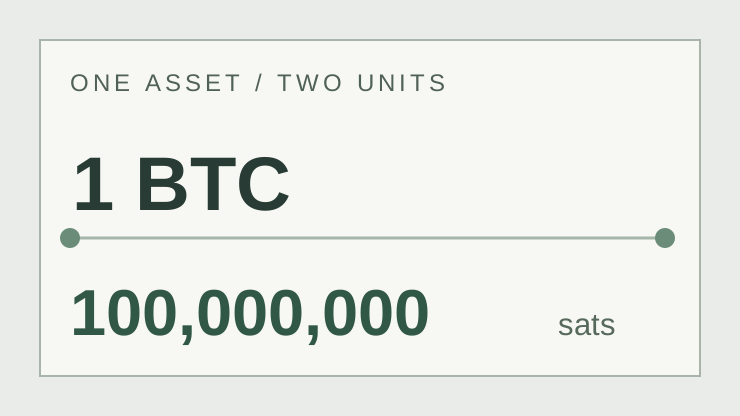
A satoshi is one hundred-millionth of a bitcoin. The rate sat/vB means satoshis per virtual byte. A rate of 10 sat/vB is therefore a price for each unit of transaction space, not a total fee of 10 sats.
Virtual size accounts for Bitcoin’s transaction-weight rules. It is calculated from transaction weight divided by four, rounded upward to a whole virtual byte. This definition comes from BIP 141. A raw file size in bytes and a virtual size in vB can differ, so use the field your wallet identifies as virtual size.
Calculate a fee step by step
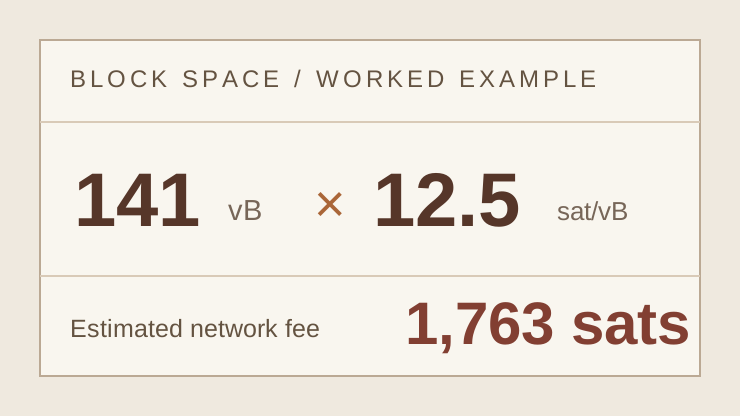
Assume a transaction has a virtual size of 141 vB and you choose an illustrative rate of 12.5 sat/vB. The multiplication gives 1,762.5 sats. Our calculator rounds that upward to 1,763 sats, equivalent to 0.00001763 BTC.
At an assumed price of $100,000 per BTC, that fee is $1.763, displayed as about $1.76. The size, rate, and price here are examples; none is a live recommendation.
| Same example size | Total fee |
|---|---|
| 5 sat/vB × 141 vB | 705 sats |
| 12.5 sat/vB × 141 vB, rounded upward | 1,763 sats |
| 30 sat/vB × 141 vB | 4,230 sats |
Changing the BTC price changes the dollar comparison, while the fee in sats stays unchanged. Use the satoshi converter to inspect that unit conversion separately.
Why transaction size varies
A wallet spends earlier transaction outputs as inputs. Receiving many small payments can leave it needing several inputs to fund a later payment. Extra inputs, outputs, and different spending conditions affect the transaction’s size.
The wallet may also create a change output returning the unspent remainder to you. The Bitcoin transaction guide explains inputs and change. Its historical fee-policy examples should not be treated as current fee recommendations.
Use your wallet’s constructed transaction estimate where available. The calculator’s starting size is only an example; it cannot inspect your balance, choose inputs, or determine the final signed transaction size.
Where the fee goes
For a valid transaction, the difference between the total input value and all output values is the fee available to the miner. Suppose inputs total 100,000 sats, the recipient receives 60,000, and your change output is 38,237. The remaining 1,763 sats are the fee. This accounting is described in the Bitcoin block chain guide.
Check the recipient amount and total debit together. A wallet may offer an option to subtract fees from the amount being sent, which changes what the recipient receives. A service’s withdrawal charge may also be different from the underlying network fee.
A rate estimate cannot promise a deadline
Fee demand changes as transactions arrive and miners produce blocks. Estimators use observations and a chosen confirmation target; they can also lack enough data to return a result. Bitcoin Core’s fee-estimation documentation describes these boundaries.
Check units when copying a rate. Bitcoin Core’s documented estimate uses BTC per 1,000 virtual bytes. For example, 0.0001 BTC/kvB equals 10 sat/vB. Entering the first number directly into a sat/vB field would produce a very different result.
Before sending, review the wallet’s final destination, amount, fee, and timing estimate. This calculator performs arithmetic; it does not broadcast a transaction, reserve block space, or guarantee confirmation. For the relationship between fees and miner incentives, continue with Bitcoin mining for beginners.
Frequently asked questions
How do I estimate a Bitcoin network fee?
Multiply the proposed sat/vB rate by your transaction's virtual size in vB. The calculator rounds the product up to whole satoshis; check your wallet's final transaction preview before sending.
Does sending more BTC automatically cost more?
No. The fee depends mainly on transaction space and the chosen rate, not the bitcoin amount transferred. More inputs, outputs or different spending conditions can change that space.
Will a fee estimate guarantee the confirmation time?
No. Demand for block space and new blocks can change after the estimate. A wallet or estimator can suggest a rate for a target, but cannot reserve a place in a block.
Can I enter a BTC per kvB quote directly as sat/vB?
No. Convert the units first. For example, 0.0001 BTC per 1,000 virtual bytes equals 10 sat/vB; typing 0.0001 into a sat/vB field would be a different rate.
Sources are listed above. This guide explains the mechanics; it is educational information, not a recommendation to invest or buy mining equipment.