Next block
— sat/vB
—
20 sat/vB × 140 vB = 2,800 sats. Compare network estimates, check the total, and keep a copy before opening your wallet.
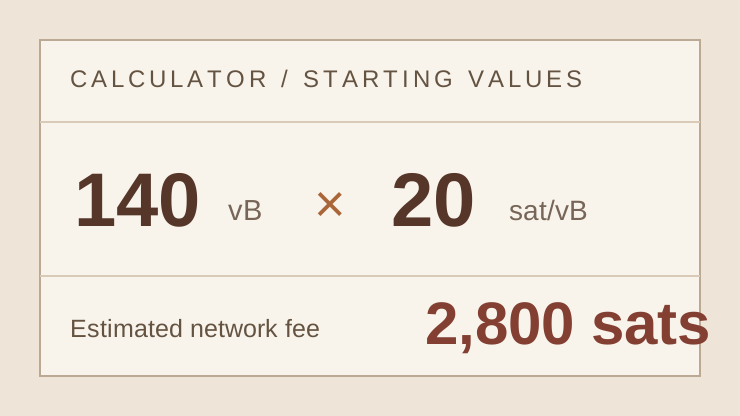
Illustrative example · not a network quote
2,800 sats
20 sat/vB × 140 vB · rounded up to whole sats
USD uses $100,000 per BTC, your editable assumption.
Your plan stays here if your browser cannot save the download. Copy the CSV into a text file and save it as hashratetimes-bitcoin-fee-plan.csv.
Network fee only. Your wallet confirms the final size and debit. No transaction is sent here.
Inputs stay in this page. They are not included in network requests or analytics.
Same transaction size. Different fee-rate assumptions.
No network estimate loaded. Your example stays unchanged until you choose a rate.
Targets are estimates, never confirmation deadlines. Economy has no fixed time target.
— sat/vB
—
— sat/vB
—
— sat/vB
—
— sat/vB
—
Source: mempool.space, via HashrateTimes. Public data may be cached for up to 60 seconds. Refresh is manual; there is no background polling.
Use the virtual size from your wallet, compare the rates, then check its final preview. An exchange withdrawal charge can differ from the network fee. The Coinbase vs Kraken fee comparison separates those charges.
The Bitcoin fees guide explains why inputs, outputs and block demand matter. If you are still choosing how to hold bitcoin, start with hardware wallet basics.
| Rate × virtual size | 20 sat/vB × 140 vB |
|---|---|
| Network fee | 2,800 sats / 0.000028 BTC |
| At $100,000 per BTC | $2.80 |
| With 100,000 sats to recipient | 102,800 sats total debit |
Fee = rate × virtual bytes, rounded up to whole sats. Amount plus fee = estimated debit; this does not subtract a fee from a send-max amount. USD = sats ÷ 100,000,000 × your entered BTC price.
Sources checked 8 October 2026: mempool's published API fields and Bitcoin transaction fees and change.
Multiply satoshis per virtual byte by virtual size, then round up to whole satoshis. At 20 sat/vB and 140 vB the fee is 2,800 sats. This is the network fee; exchanges or services can charge separately.
No. Next block, about 30 minutes and about one hour are mempool.space estimates, not deadlines. Economy has no fixed time target. Block arrival and competing transactions change. Check your wallet before sending.
The page starts with a labelled example. Load network estimates to retrieve a mempool.space snapshot through HashrateTimes. It may be cached for up to 60 seconds; reuse is disabled one minute after retrieval. The dollar price stays your own assumption and never updates automatically.
Here the optional recipient amount is what they receive. The fee is added on top to estimate your wallet debit. This is not a send-max calculation. Change outputs can affect virtual size; check the completed transaction in your wallet.
Use the virtual size from your wallet preview or coin-control details. Inputs, outputs and script types affect it, not just the amount sent. The example 140 vB is not a universal transaction size.
Your numbers stay in this page and are not sent with network requests or analytics. Download CSV saves your assumptions and results to a file you choose to keep. Reloading clears the inputs. No wallet connection, account or transaction is needed.
HashrateTimes editorial · Updated