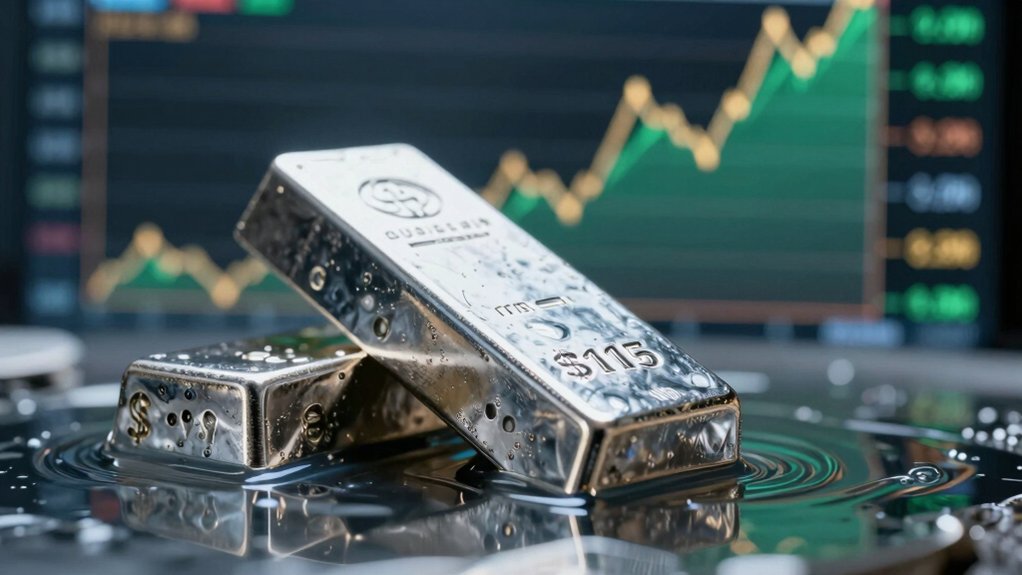

How did silver manage to surpass the $115 per ounce threshold for the first time in history on January 26, 2026? On that day, silver prices reached an unprecedented intraday high of $115.08 per troy ounce before settling around $107.36 by the market close, with March 2026 futures contracts on the Comex exchange also exceeding $115. This surge represented a gain of over 12%, contributing to a fourfold increase compared to prices a year prior, signaling significant shifts within the precious metals market. Such a rapid escalation highlights underlying fundamental and macroeconomic dynamics that distinguished silver’s rally from those in other asset classes. Silver’s remarkable performance has been further underscored by its status as the best-performing major asset in 2026 so far. Notably, the March 2026 futures on the Comex reached a new all-time high above $115 per troy ounce at one point during trading on that day, emphasizing the strength of the rally futures milestone.
Silver’s historic surge past $115 marked a fourfold yearly gain amid pivotal market shifts.
Industrial demand emerged as a primary driver behind silver’s notable price appreciation. With approximately 60% of silver consumption attributed to industrial uses, this share has been increasing steadily, fueled by the expansion of energy transformation technologies. Silver plays a critical role in solar panel manufacturing, where global installations are expected to consume more than 120 million ounces in 2026 alone. Additionally, high-performance electronics for artificial intelligence data centers, electric vehicles, and grid modernization projects further tighten effective supply, imposing considerable pressure on available silver resources. These factors collectively exacerbate scarcity amid a supply environment constrained by limited mine output growth and export restrictions, most especially initiated by China starting January 1, 2026. Meanwhile, evolving regulatory challenges in key Asian markets could influence future silver trading dynamics and investor confidence.
Macroeconomic elements also contributed to silver’s breakthrough. Persistent weakness in the U.S. dollar, alongside expectations of interest rate cuts and political uncertainties in Washington, have bolstered the precious metals sector as a preferred haven under volatile market conditions. The gold-to-silver ratio declining to approximately 46.08:1 during this period underscored silver’s relative outperformance. Historically, such ratios compress during precious metals bull markets, suggesting further room for silver price appreciation, particularly as gold simultaneously reached new all-time highs above $5,100 per troy ounce.
Despite these bullish signals, investors should remain attentive to potential risks such as supply chain disruptions, market liquidity constraints, and geopolitical developments that could temper silver’s advances. While forecasts increasingly consider prices above $125 per ounce realistic in 2026, caution is warranted regarding rapid price swings and regulatory changes affecting both physical and paper silver markets. Consequently, silver’s rise beyond $115 represents a complex interplay of industrial growth, market tightness, and macroeconomic factors rather than a straightforward upward trajectory, necessitating measured analysis for informed decision-making.