In this field note
Start with the signing boundary
A Bitcoin wallet helps you receive and spend; bitcoin itself is recorded through the network, not stored as coins inside an app or a card. The practical question is where the authority to sign a payment is kept and used.
A self-custody software wallet can perform signing on your everyday phone or computer. A hardware setup generally separates that operation into a dedicated device and uses companion software to prepare or broadcast the transaction. The Bitcoin developer guide describes how signing and network functions can be separated. An app may also be the interface for a hardware signer, so the categories are not always competing products.
Compare the complete workflow
| Question | Self-custody software wallet | Hardware signer with companion app |
|---|---|---|
| Signing | Usually on the general-purpose device running the wallet | On the dedicated signer, subject to the product’s design |
| Everyday access | The phone or computer and its wallet are needed | The signer and a compatible interface are generally needed |
| Initial equipment | Can use a device you already own | Requires the hardware and any required accessories |
| Recovery | Depends on that wallet’s backup and any additional requirements | Depends on the chosen device and backup arrangement |
| Payment review | Check details in the wallet interface | Check the supported confirmation method; some devices have a separate screen and others do not |
The table is a starting point, not a security certification. A hardware device can help isolate signing secrets from a compromised general-purpose machine, but a user can still approve an attacker’s address or expose recovery material. A software wallet’s security depends on its implementation, device and backup as well. The manufacturer’s hardware-wallet explanation describes the isolation goal; it does not establish a universal safety ranking across products.
Match access to the job
If you want a wallet for frequent small payments, an application on an existing phone may be convenient. If you want a separate approval device for a different portion of your holdings, a compatible hardware signer may fit the way you work. You do not have to make one tool serve every purpose, and a second wallet adds a second recovery process to manage.
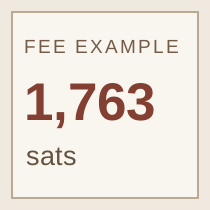
Cost is more than the advertised device price. Compare the delivered total, compatible phone or computer, spare equipment and any accessories you actually need. On-chain transaction fees are separate from buying a wallet. For a hypothetical 140 vB transaction at 10 sat/vB, the network fee is 1,400 sats; a different transaction size or fee rate changes that amount. An exchange can also charge a separate withdrawal fee. Explore assumptions with the Bitcoin fee calculator.
Test the recovery plan before relying on it
For each setup, write down what you would need if the phone, computer or signer stopped working. Depending on the wallet, recovery may require a phrase, an additional passphrase, a linked backup device, compatible software or a combination. Do not assume every wallet uses the same standard. The BIP39 specification documents one common phrase-based method, not all possible backups.
Protect recovery material separately from the everyday device. A PIN may protect access to a device, but it does not prevent someone from using recovery information they have obtained elsewhere. Never enter recovery words into a website, message or unsolicited support form. Our private-key guide explains the difference between a PIN, keys and recovery material. Follow the wallet’s official backup-check procedure; do not wipe your only working device to test an uncertain backup.
Check the recipient in either setup
Suppose you intend to send 0.001 BTC, or 100,000 sats, before fees. Compare the full destination and amount with information obtained through a trusted route, and inspect the final debit before approving. A separate screen can provide another place to check the transaction, but it cannot tell whether the person who supplied an address is honest. Some hardware wallets have no independent screen; understand the actual product’s confirmation workflow.
The satoshi converter checks the unit conversion; it cannot verify an address or reverse a payment. Bitcoin.org’s wallet security guidance discusses backups and protecting online devices. Test a new receiving and spending workflow with an amount appropriate to your own circumstances, accounting for the fee, before depending on it.
Make the decision without assuming a purchase
First identify who controls the spending keys. An account with an exchange holding those keys is a custodial service, even when you access it through an app. A self-custody wallet changes who is responsible for the backup; buying hardware does not automatically move a balance from an exchange.
If a separate signer meets a specific need, our hardware-wallet guide explains signing and backup checks. For concrete device trade-offs, compare Tangem vs Ledger or Tangem vs Trezor. HashrateTimes has a Tangem referral relationship, disclosed in its Tangem review; the choice here does not depend on making a purchase.
Frequently asked questions
Is a hardware wallet always safer than a software wallet?
A separate signer can reduce exposure of signing secrets to a general-purpose device, but it does not prevent every scam or protect a disclosed backup. Security also depends on the particular product, setup and user actions.
Can I use a software wallet with a hardware device?
Often, yes. A compatible app can prepare transactions while the separate device signs them. Check support for the precise app, device, network and account type; compatibility is not universal.
What happens if I lose my phone or hardware wallet?
The recovery route depends on the wallet. A compatible backup and any required passphrase or linked device may restore access. Losing all required recovery material can mean losing access, regardless of wallet type.
Do I need to buy a device before receiving Bitcoin?
No. A self-custody software wallet can receive Bitcoin without a separate hardware purchase. First understand its backup and spending process; if you choose a hardware device, compare the complete setup and its recovery requirements.
Sources are listed above. This guide explains the mechanics; it is educational information, not a recommendation to invest or buy mining equipment.