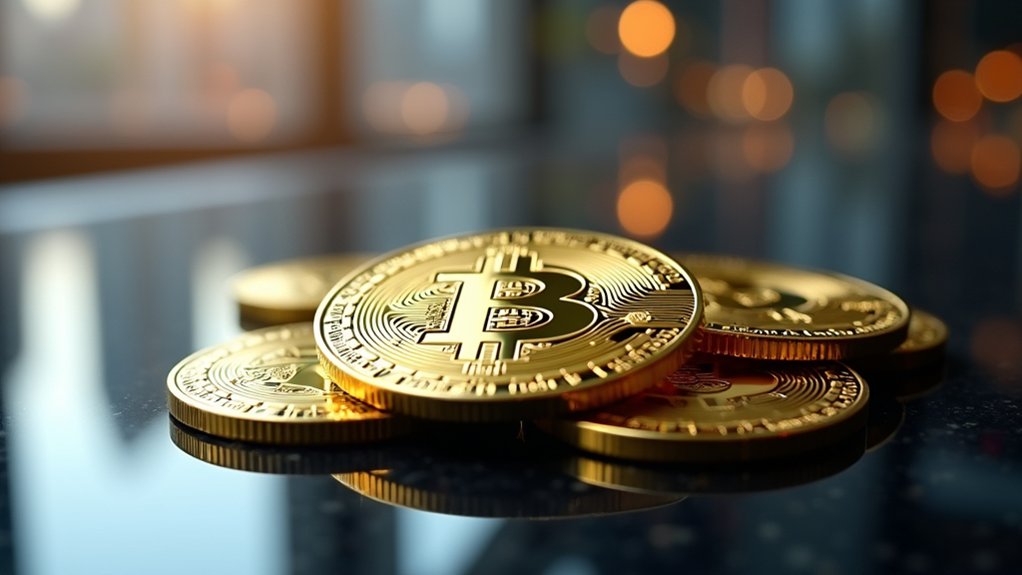

Bitcoin represents a unique digital asset distinguished by its fundamental monetary properties and innovative technological framework, making it a subject of increasing interest in financial markets. It fulfills the six essential characteristics of money: durability, portability, divisibility, uniformity, scarce supply, and acceptability. Unlike physical commodities, Bitcoin is impervious to degradation over time, while its digital nature facilitates seamless cross-border transactions without physical limitations. Each Bitcoin is divisible into satoshis, enabling highly granular exchanges, and all units maintain identical value irrespective of ownership or location. Importantly, Bitcoin’s supply is capped at 21 million coins, embedding scarcity akin to precious metals and eliminating inflationary pressures commonly associated with fiat currencies. Moreover, Bitcoin’s non-sovereign nature ensures it maintains value independently of any government or centralized authority. This fixed supply is enforced by a hard cap of 21 million Bitcoin, which is a core feature that drives demand and incentivizes network validation.
Bitcoin embodies the six core monetary traits with a capped supply, enabling durable, divisible, and borderless value transfer.
This scarcity underpins Bitcoin’s classification as a distinct asset class, further supported by features such as network effects, immutability, censorship resistance, and decentralization. The decentralized consensus mechanism involves thousands of independent nodes globally, fostering security and trust without reliance on centralized authorities. Transaction records are permanent and tamper-resistant, ensuring ownership cannot be arbitrarily revoked. These qualities contribute to Bitcoin’s resilience and its appeal as an investment vehicle with unique politico-economic attributes, differentiating it from stocks, bonds, or commodities.
Analyst Willy Woo has described Bitcoin as a “perfect asset” for the next millennium, a characterization grounded in its fundamental properties and potential for sustained value appreciation. Despite reaching a market capitalization of approximately $2.42 trillion, Bitcoin remains considerably smaller than gold or the US dollar money supply, indicating substantial room for capital inflow to approach traditional stores of value. Nonetheless, the investment landscape is not without risks; entities holding significant Bitcoin reserves may face vulnerabilities related to undisclosed debt structures or market downturns that prompt liquidation, which could induce price volatility.
While Bitcoin offers portfolio diversification benefits due to its typically low correlation with conventional assets, its role as a safe haven remains debated, often functioning more as a risk asset in turbulent markets. The fluctuating correlations with traditional financial instruments suggest that Bitcoin’s hedging effectiveness varies over time, warranting cautious integration within broader investment strategies.