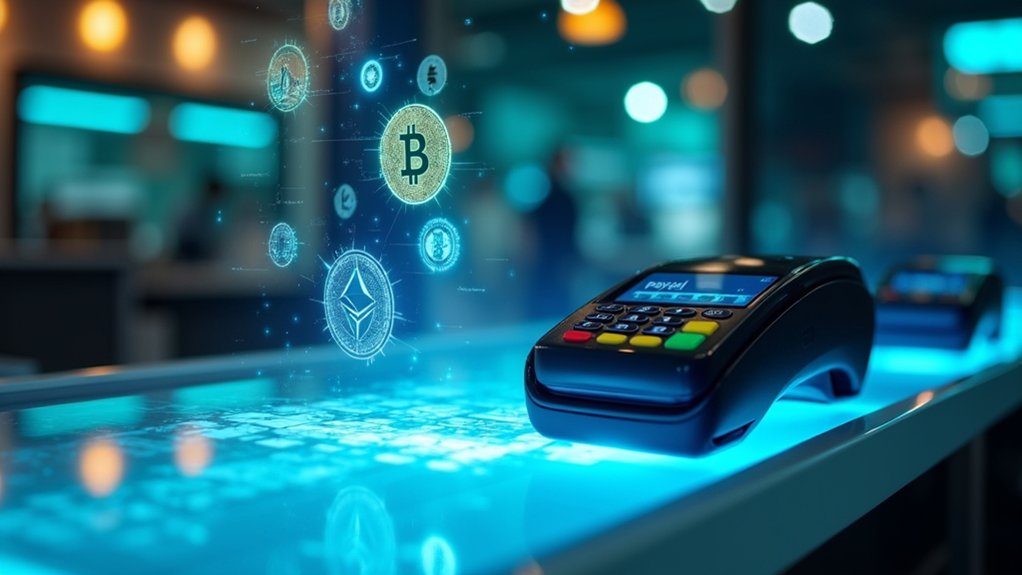

How long can the payments industry cling to outdated credit card fees before succumbing to the disruptive force of cryptocurrency integration? PayPal’s bold move to enable merchants across the U.S. to accept payments in over 100 cryptocurrencies—including giants like Bitcoin, Ethereum, and stablecoins such as USD Tether and its own PYUSD—bluntly challenges the entrenched dominance of credit cards. By offering a promotional transaction fee of 0.99% for the first year, rising modestly to 1.5%, PayPal undercuts the average 1.57% credit card fee with surgical precision, exposing the inflated costs that merchants have long been forced to shoulder. Any U.S. business using PayPal’s online payment platform can opt into this new crypto acceptance feature, making it widely accessible to merchants nationwide merchant eligibility.
PayPal slashes fees, empowering merchants with crypto payments and challenging credit card dominance.
This is not a mere gimmick. The platform’s seamless integration with major crypto wallets like Coinbase, Binance, and MetaMask revolutionizes checkout friction, while instant conversion to U.S. dollars or PYUSD shields merchants from the notorious volatility of digital assets. The ingenious layer of PYUSD, pegged 1:1 to the dollar and backed by a 4% annual reward, tantalizes businesses with enhanced profitability and liquidity, turning what was once a speculative liability into a stable asset class. This connectivity also opens merchants to a $3+ trillion crypto market, vastly expanding their potential customer base.
PayPal’s ambition extends beyond cost reduction; it’s a strategic incursion into a $3+ trillion crypto market, encompassing nearly 90% of its capitalization, and a clear signal that the future of payments is borderless, inclusive, and digital-first. Partnerships like the one with Fiserv further embed stablecoins into global commerce, promising faster, more efficient cross-border transactions.
In this light, PayPal’s move isn’t just disruptive—it’s a reckoning. The question isn’t if credit cards will fade, but how swiftly the industry will abandon its complacency in the face of an undeniable technological shift.