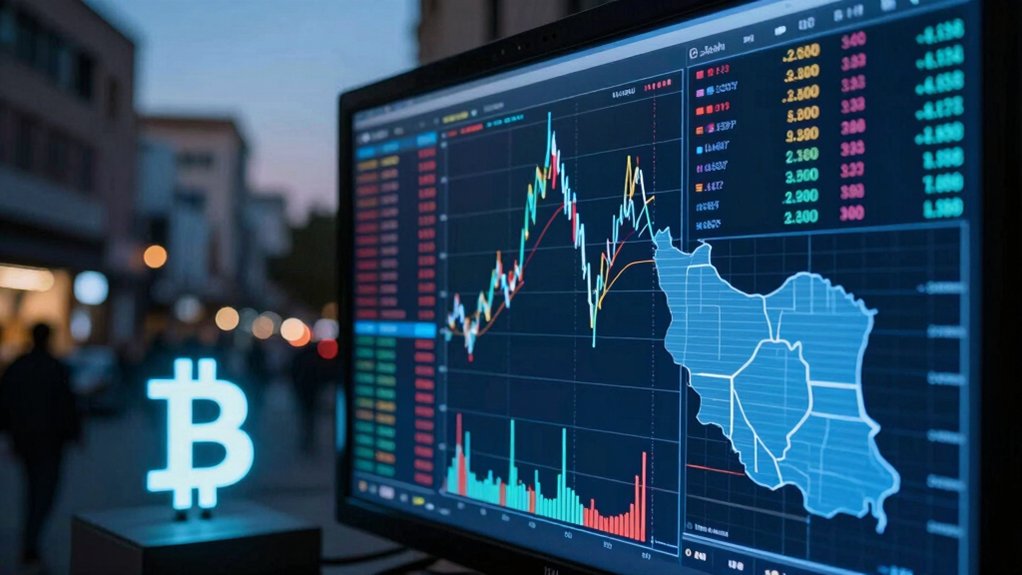

How have recent geopolitical tensions influenced cryptocurrency flows in Iran? In the wake of the US-Israeli airstrikes on Iranian territory, outflows from Iran’s largest crypto exchange, Nobitex, surged dramatically by approximately 700% within minutes, with hourly withdrawal volumes peaking near $3 million. The initial surge saw over half a million dollars withdrawn immediately after the first strike, signaling urgent capital movements. These funds were traced to overseas crypto asset exchanges, highlighting how global geopolitical incidents can trigger rapid adjustments in capital allocations. This surge coincided with US sanctions announced earlier in January, further complicating the financial landscape for Iranian actors. Early withdrawal volumes exceeding $500,000 underscore the immediate scale of the response to the airstrikes.
Geopolitical tensions triggered a 700% spike in crypto outflows from Iran’s Nobitex exchange within minutes.
Nobitex, which dominates about 87% of Iran’s crypto trading volume and serves over 11 million users, processed $7.2 billion in crypto transactions during 2025 alone, including around $5 billion since the start of that year. The platform’s integration with rial-to-crypto conversions facilitates external wallet withdrawals, a feature that, while innovative, has been linked to financial activity aligned with the IRGC and partly overseen by Iran’s Central Bank. Nobitex’s role in the domestic financial system is underscored by its use in supporting the rial’s depreciation. This infrastructure effectively enables capital flight by circumventing the traditional banking system, especially amid economic instability, sanctions, and local currency depreciation.
Despite the initial surge, internet connectivity dropped by 99% shortly after due to regime-imposed shutdowns aimed at curtailing information flow and capital outflows, mirroring previous tactics during conflicts and protests. These blackouts substantially reduced withdrawal activity as exchanges adopted defensive postures, limiting additional capital flight opportunities. Regulatory responses included directives from the Central Bank of Iran to suspend specific stablecoin trading pairs on Nobitex, curbing rapid rial repricing and restricting savers’ access to dollar exposure, while blockchain transparency allowed authorities to trace transactions.
Discrepancies remain among analytics firms regarding the nature of these outflows; Elliptic interprets them as genuine capital flight to foreign exchanges, whereas TRM Labs considers some movements internal treasury reallocations within historical norms. This debate underscores challenges in quantifying the real scale of capital movement during crises, although on-chain data affirms crypto’s role as a flight channel despite restrictive measures. Importantly, incoming transfers from Nobitex to Western exchanges pose compliance and sanctions risks, as these flows sometimes represent attempts at sanctions evasion with tainted assets. The precision of blockchain records enhances monitoring capabilities, alerting Western exchanges to the possibility of freezing high-risk inflows to maintain regulatory adherence.